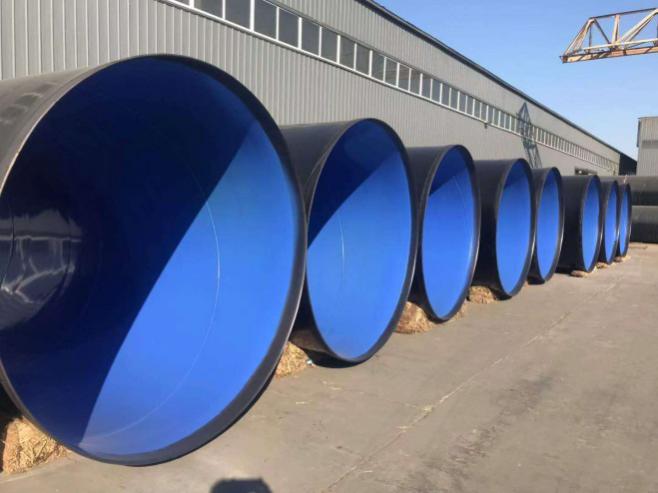
The full name of TPEP anti-corrosion steel pipe is Internal Fusion-Bonded Epoxy and External 3PE Anti-Corrosion Steel Pipe.
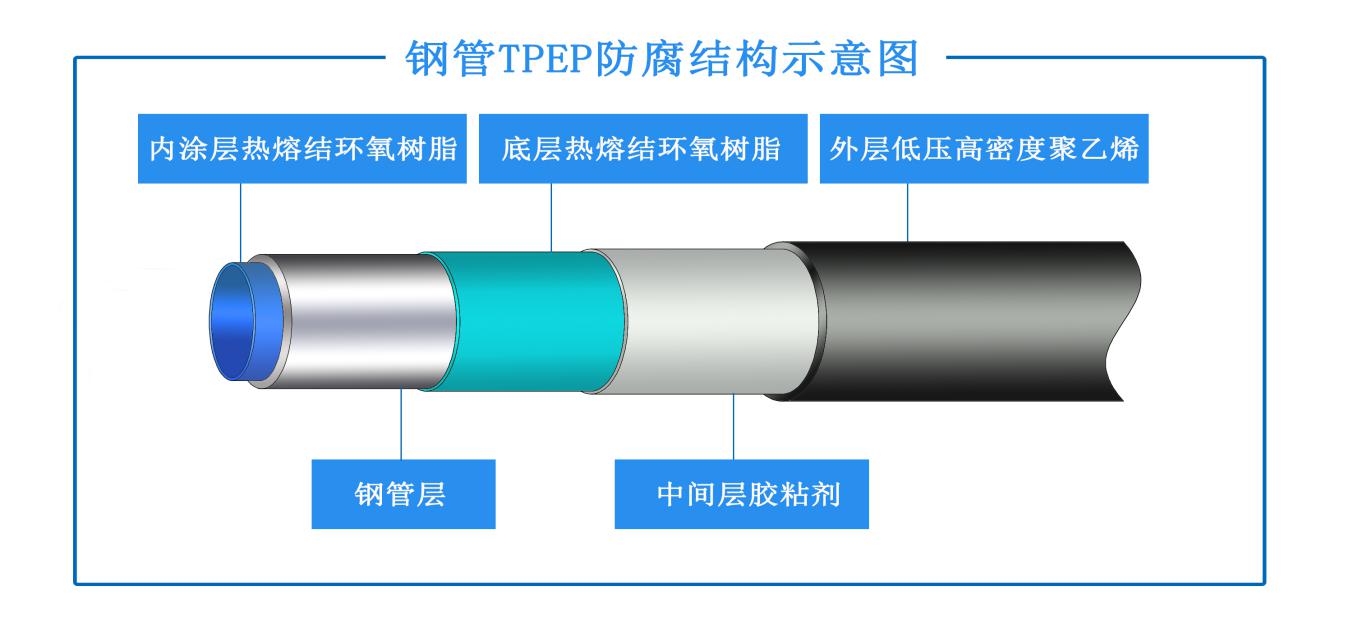
It uses steel pipe as the base material. The inner wall is coated with fusion-bonded epoxy powder through high-temperature melting and uniform application, forming a steel-plastic alloy layer. The outer wall adopts a three-layer structure of wrapped polyethylene for anti-corrosion protection.
TPEP anti-corrosion steel pipe is an upgraded product based on composite steel pipes with external single-layer polyethylene and internal epoxy coating, representing the fourth-generation new anti-corrosion production technology.
Internal fusion-bonded epoxy coating (thickness > 0.4 mm):
Chemical corrosion resistance, cathodic disbondment resistance, smooth surface, environmentally friendly.
First layer: epoxy powder (≥ 120 μm):
Chemical corrosion resistance, cathodic disbondment resistance.
Second layer: adhesive (≥ 170 μm):
Bonds the underlying epoxy layer and the outer polyethylene layer.
Third layer: polyethylene (2.2–4.2 mm):
Mechanical protection and corrosion resistance.
1.Development and application of the product at home and abroad
abroad | In the early 1980s, it took the lead in applying in Europe |
domestic | Stage | Study tour | Equipment introduction | Widely used |
time | 1994 | 1995 | 1996 | 2000年 |
Unit / Organization | CNPC system | Liaohe Oilfield Construction Company | Baoji Yadong Anti-corrosion Company | PetroChina Qinghai Oilfield Company (West-to-East Gas Transmission Project – Se-Ning-Lan Pipeline) |
2. Product PerformanceTPEP composite coating:
Both polyethylene and epoxy have excellent corrosion resistance. Polyethylene is a thermoplastic material with good flexibility and impact resistance.
Epoxy resin is a polar molecule containing hydroxyl groups, which can easily react with steel pipe at a certain temperature and exhibits extremely strong adhesion. Therefore, the combination of these two materials is currently the optimal match in the anti-corrosion industry.
(1) Excellent Corrosion Resistance and ImpermeabilityEpoxy coating and polyethylene layer feature high impermeability, high sealing performance, and strong insulation properties.
Peel strength (N/cm):
≥ 100 at 20℃±5℃,
≥ 70 at 60℃±5℃.
Corrosion resistance is 3–5 times higher than that of composite steel pipes with internal EP and external PE coating.
Design service life is no less than 50 years (applied in domestic oil & gas fields for more than 20 years, and abroad for more than 30 years).
(2) Smooth Inner Wall, Low RoughnessInner wall roughness: 0.0081–0.0091, average 0.0086 (tested by the Test Center of China Institute of Water Resources and Hydropower Research).
Low head loss, and scaling is not easy to occur on the inner wall.
(3) Light Weight and High Toughness of 3PE Anti-corrosion Steel PipeLight weight and high toughness make construction, installation and hoisting convenient.
It adapts to various complex terrains, has low requirements for foundations, and features strong resistance to foundation settlement and earthquakes.
(4) Green, Safe and Environmentally FriendlyThe internal fusion-bonded epoxy powder is food-grade and green. The external wall is wrapped with polyethylene, which is environmentally friendly and has passed hygiene, health and safety inspections.
(5) Strong Adhesion and Good Impact ResistanceThe inner wall and outer base layer adopt medium-frequency heating for fusion-bonded epoxy powder, which greatly improves coating adhesion.
The outer polyethylene winding layer significantly enhances impact resistance.
High toughness, strong resistance to stress cracking, and good impact resistance (impact strength ≥ 8 J/mm).
3. Application FieldsThis product is suitable for water conservancy, municipal water supply, petroleum and natural gas transmission, coal mines, power plants and other fluid transmission projects.
4. Implementation StandardsExternal anti-corrosion layer:
GB/T 23257-2017Polyethylene Coating for Buried Steel Pipelines
Internal anti-corrosion layer:
CJ/T 120-2016Plastic-Coated Composite Steel Pipes for Water Supply
▼Internal epoxy coating thickness(CJ/T120-2016)
DN(mm) | Inner Coating (Epoxy Resin) Thickness(mm) |
DN≤300 | ≥0.35 |
350≤DN≤800 | ≥0.4 |
DN≥900 | ≥0.45 |
Hygienic performance (for drinking water transmission) complies with the provisions of GB/T 17219 |
▼Thickness of the external 3PE anti-corrosion coating(GB/T23257-2017)
Nominal diameter of steel pipe DN(mm) | Epoxy coating (μm) | External 3PE anti-corrosion layer thickness (μm) | Minimum thickness of the anti-corrosion layer(mm) |
Normal Grade(G) | Enhanced Grade(S) |
250<DN<500 | ≥120 | ≥170 | 2.2 | 2.9 |
500≤DN<800 | ≥150 | 2.5 | 3.2 |
800≤DN≤1200 | 3.0 | 3.7 |
DN>1200 | 3.3 | 4.2 |
Only applicable to three-layer polyethylene anti-corrosion coating, not applicable to two-layer polyethylene anti-corrosion coating. |
▼Performance Indicators of External 3PE Anti-corrosion Coating(GB/T23257-2017)
Item | Performance Indicators | Test Method |
Peel Strength(N/cm) 20℃±5℃ 60℃±5℃ | ≥100(Cohesive failure) ≥70(Cohesive failure) | GB/T23257 附錄K |
Cathode Disbondment(60℃,48h) | ≤5mm | GB/T23257 附錄D |
(J/mm)
| ≥8 | GB/T23257 附錄L |
Bending Resistance(-30℃,2.5°) | Polyethylene without cracking | GB/T23257附錄E |
(80℃,48h) | Average edge lifting depth≤2mm Max≤3mm | GB/T23257附錄M |
Curing Degree of Epoxy Powder(%) | ≥95 | GB/T23257附錄 |
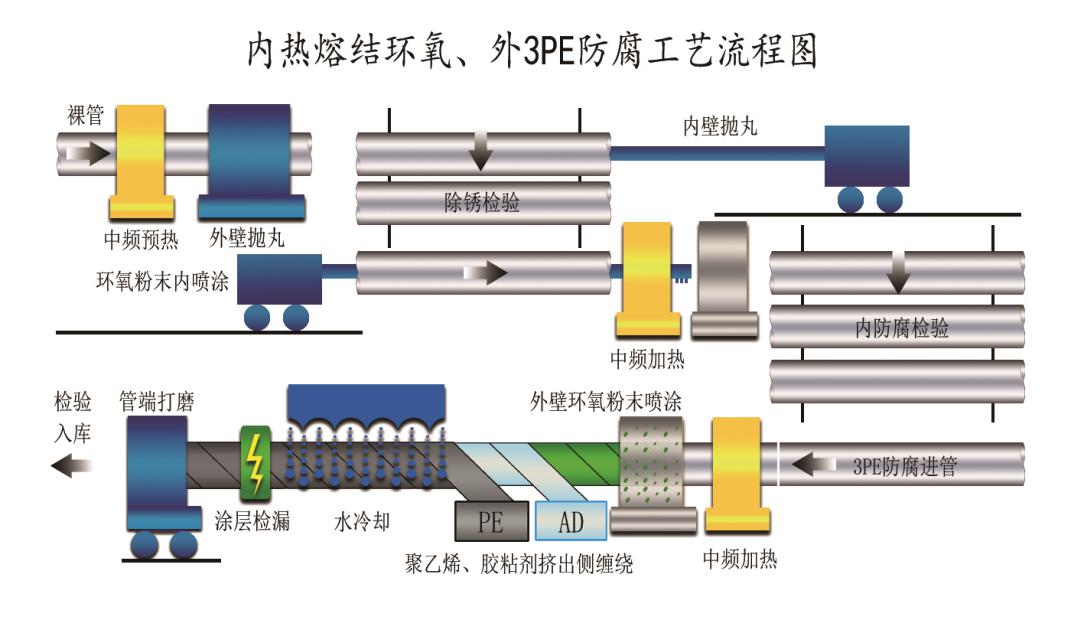
5.Anticorrosion process flow
6.Specifications and Dimensions
Specification and Size Table of TPEP Composite Steel Pipe
Nominal diameterDN(mm) | Outer diameter of steel pipe/mm | Conventional wall thickness(mm) | Single length(m) |
SeriesⅠ | SeriesⅡ |
400 | 406.4 | 426 | 6 | 12 |
500 | 508 | 529 | 7 | 12 |
600 | 610 | 630 | 8 | 12 |
700 | 711 | 720 | 8 | 12 |
800 | 813 | 820 | 8 | 12 |
900 | 914 | 920 | 10 | 12 |
1000 | 1016 | 1020 | 12 | 12 |
1200 | 1219 | 1220 | 12 | 12 |
1400 | 1622 | 1420 | 14 | 12 |
1600 | 1626 | 1620 | 14 | 12 |
1800 | 1829 | 1820 | 16 | 12 |
2000 | 2032 | 2020 | 18 | 12 |
The actual wall thickness shall be designed according to the actual working conditions and operating conditions. |
7. Connection Method(1) Butt Welded Joint
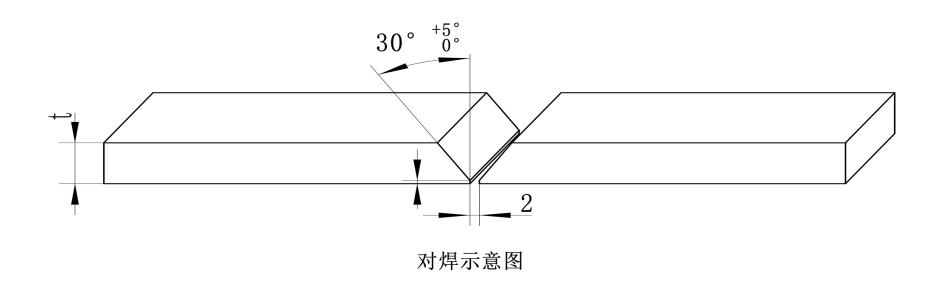
The construction and installation of TPEP composite steel pipes mainly adopt the butt welding method. Although the construction and installation cost is relatively higher than that of flexible joints, the joint sealing performance and safety factor are higher.
Butt welding forms a butt groove weld. In terms of weld strength and stress conditions, the butt welded joint is superior to the socket joint. Therefore, butt welding is recommended for working conditions with high pressure levels and complex service environments.
(2) Lined Stainless Steel Interface
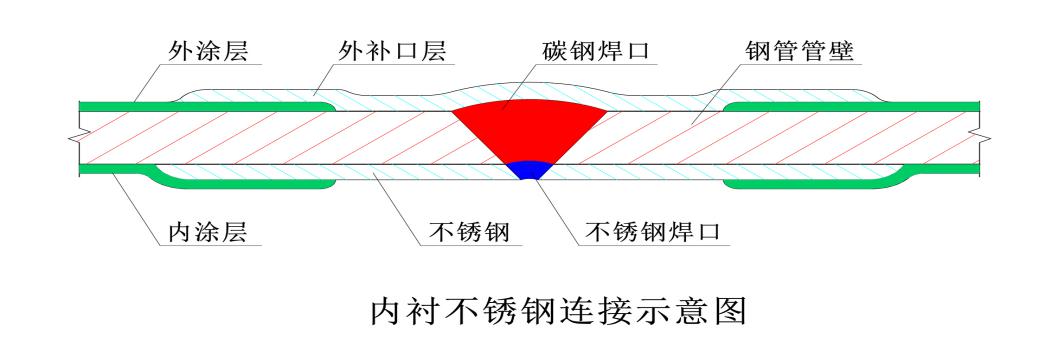
To solve the issue of field joint coating on the inner wall of small-diameter pipes, C304 stainless steel is welded onto the inner wall at both ends of the steel pipe, eliminating the need for additional inner wall joint coating.
This method is generally only used for pipes with a diameter of DN600mm and below (with slightly higher construction cost).