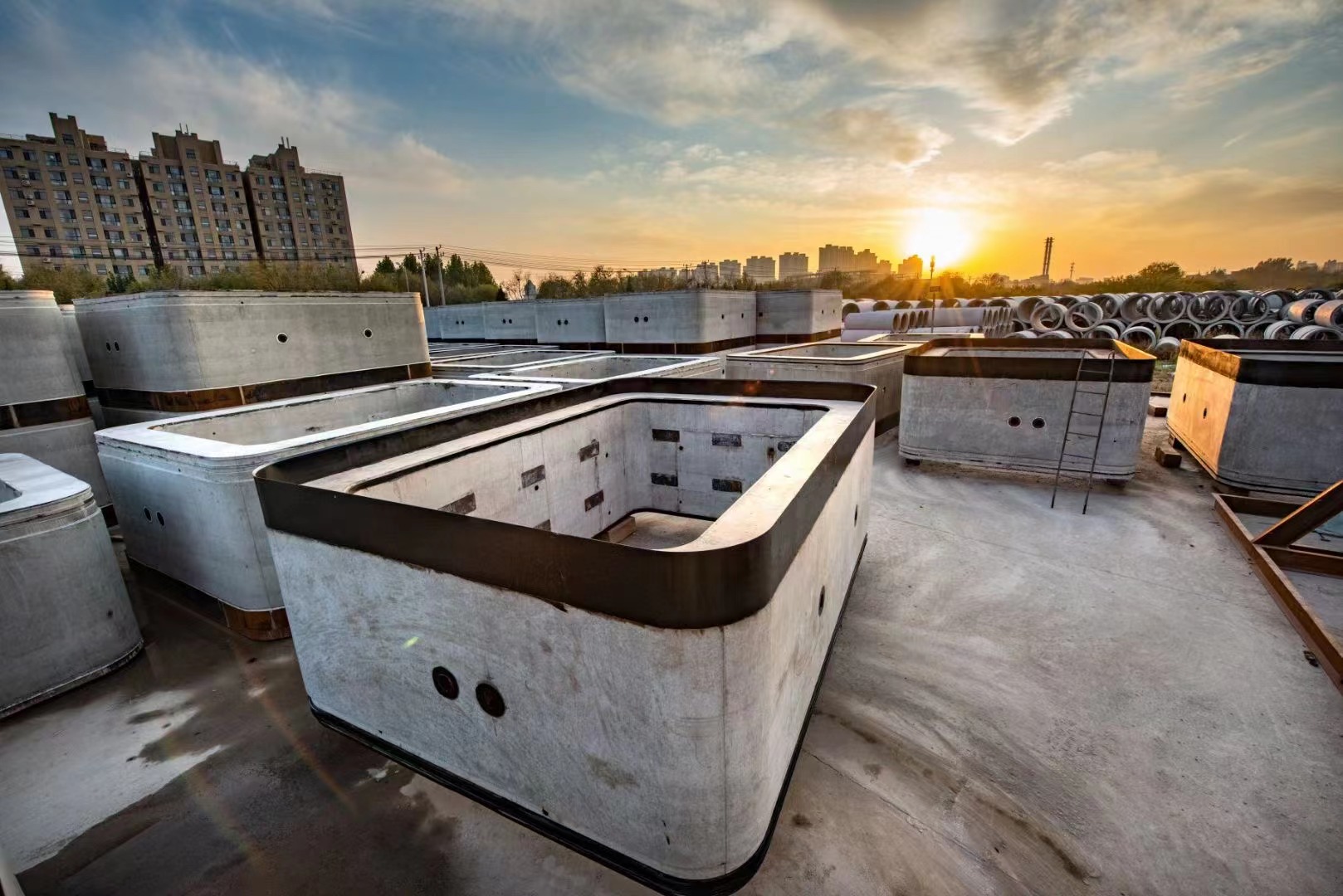
The so-called “utility tunnel (also known as a common trench)” refers to an underground channel specially built for laying various public utility cables and pipelines. It integrates urban water supply, sewage, stormwater, gas, heating, communication and other pipelines into one shared tunnel for integrated management.
Advantages:
A relatively advanced form of infrastructure pipeline layout in the world today
A trend and imperative in urban construction and urban development
An effective way to make full use of underground space
It keeps the road appearance intact and aesthetic, eliminates repeated excavation of urban roads and greenbelts caused by the laying and maintenance of various pipelines, and removes the adverse impacts on city appearance, traffic and residents’ daily life.
Compared with traditional directly buried pipelines, it is easier to inspect and maintain, less prone to damage, and ensures the safety of underground pipelines.
It makes spatial utilization more sufficient, compact and economical, reduces maintenance costs of various engineering pipelines and road reconstruction costs, and greatly saves urban underground space.
It promotes the modernization of urban infrastructure, keeps the urban energy flow, material flow and information flow unobstructed, and maintains the normal operation of various functions in urban central areas.
The construction of underground utility tunnels can take advantage of the high protection performance of underground space, greatly improving their resistance to disasters such as earthquakes and typhoons, and minimizing losses caused by disasters.
At a time when the construction of overhead power grids in urban areas faces many difficulties, underground utility tunnels can directly bring 110kV, 220kV and even 500kV high-voltage transmission lines into urban central areas, solving the problem of large-capacity power transmission to busy urban districts.
It is economically feasible. According to estimates, although an underground utility tunnel accommodating all pipelines has a relatively high construction cost, it offers a better cost-performance ratio when comprehensively compared with the traditional method, including the laying costs of various infrastructure pipelines and compensation costs for road surface damage.

Scope of Application for Utility Tunnel
The utility tunnel shall be planned and constructed for municipal public utility pipelines under any of the following conditions:
Road sections with heavy traffic or numerous underground pipelines, such as motor vehicle lanes, urban arterial roads, and areas coordinated with construction projects including subways, underground roads, and interchanges.
Road sections where pavement excavation is inappropriate.
Intersections of squares or major roads.
Roads where multiple engineering pipelines need to be laid simultaneously.
Intersections of roads with railways or watercourses.
Road sections where the road width is insufficient to accommodate direct burial of multiple pipelines.
Implementation Standard
GB 50838-2015 Code for Design of Urban Utility Tunnel